The Making of a 60 x 96 Painting
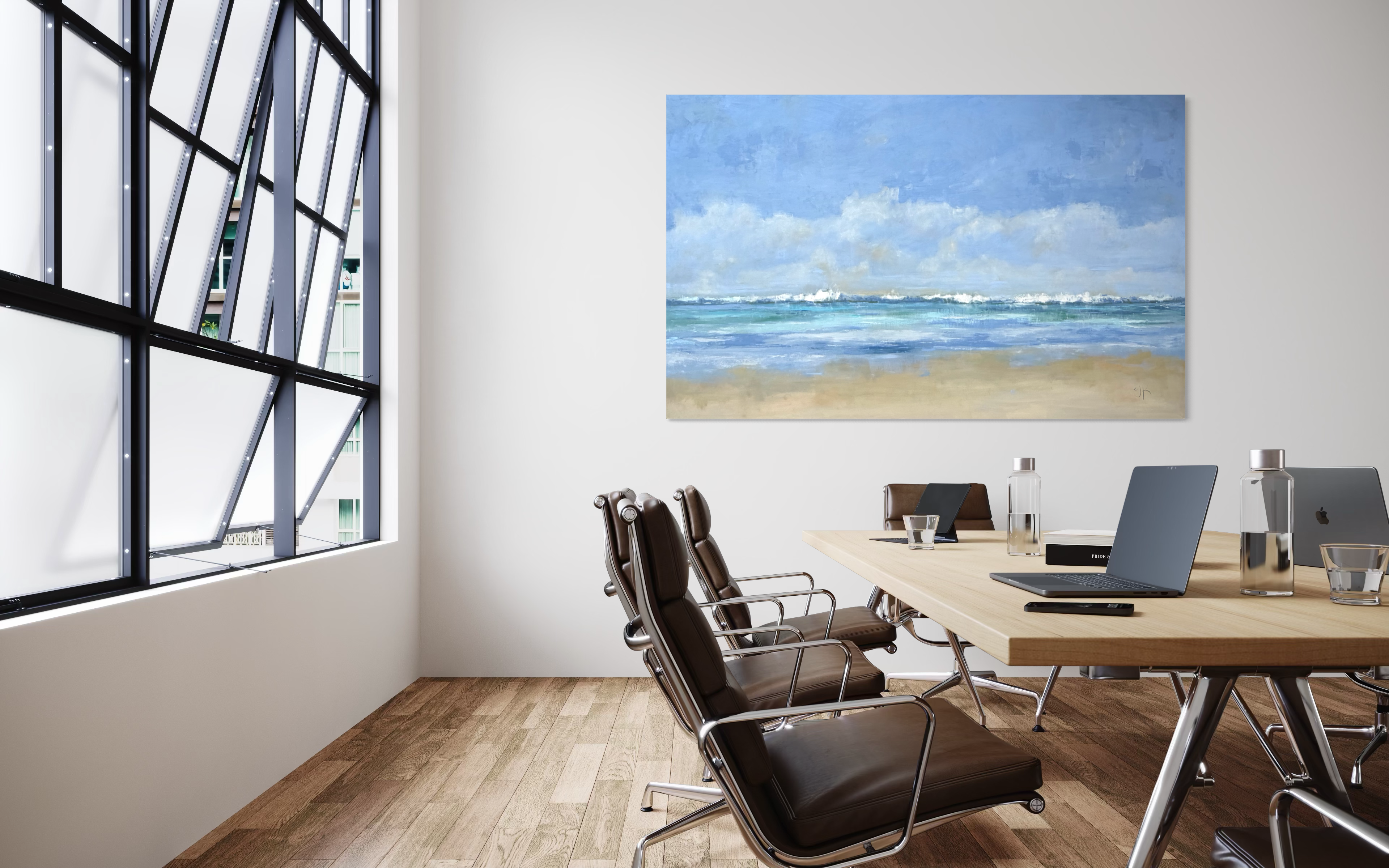
Blue Horizon, 2026, 60×96 Oil on Canvas by Claire Jane Kendrick, www.cjk-studio.com
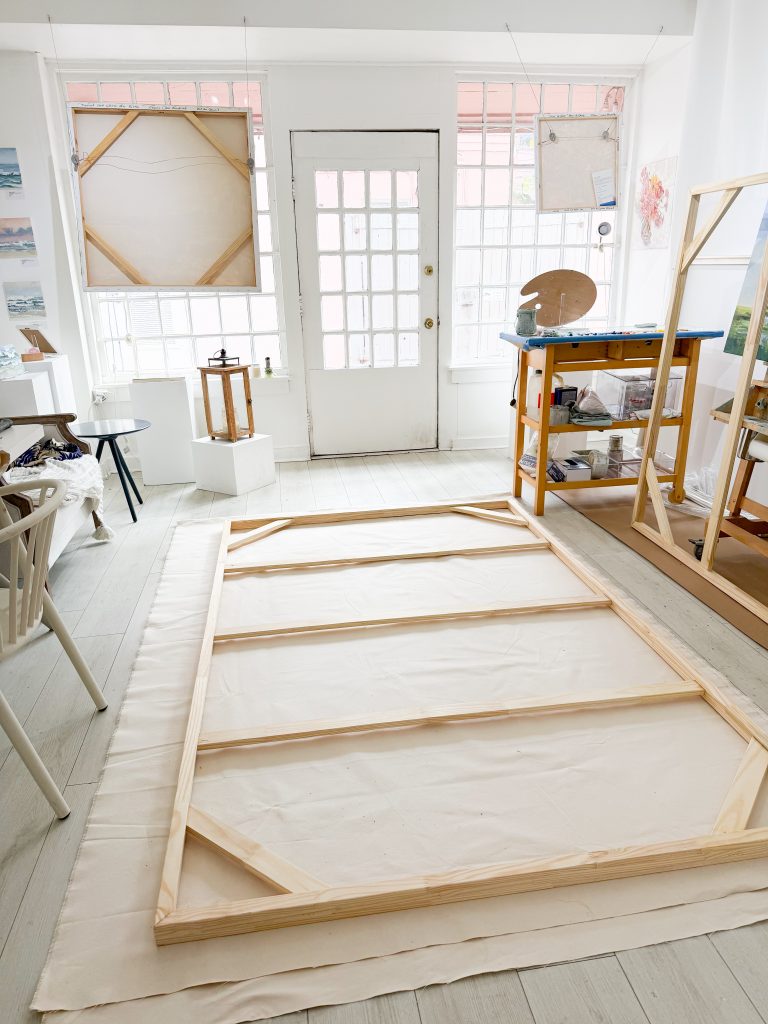
There is something different about standing in front of a painting that measures five feet by eight feet.
At this scale, the work does not simply occupy a wall. It changes the relationship between the viewer and the space around it. The painting becomes architectural.
For Claire Jane Kendrick, working at this scale is both an artistic challenge and an opportunity. The question is not simply how to make a larger painting, but how to preserve the energy, spontaneity and vibrancy found in a smaller work while allowing the composition to expand.
“The challenge is keeping the energy fresh,” Kendrick explains. “The brushstrokes have to retain their vitality. The painting cannot feel like a small painting simply enlarged.”
A 60 x 96-inch canvas demands commitment. There is a physicality to the process, but also a psychological one. An idea has to be pursued over time. Decisions are made, reconsidered and sometimes painted over. Layers accumulate. What initially appears to be a simple coastal composition can become an extended investigation into movement, atmosphere, color and space.
For Kendrick, the scale of the work also represents a progression in her practice.
Large paintings require patience. They require the artist to remain committed to an idea long enough for it to develop, while remaining open enough to recognize when the painting is asking for something unexpected. Over time, these works reveal more than an evolution of technique; they reveal an evolution in the artist’s thinking.
Large-scale are created with a particular architectural setting, private commission or significant space in mind. Their scale makes them inherently selective, and when they do enter a gallery exhibition, they have an immediate presence.
Kendrick’s sensitivity to architecture is perhaps unsurprising.
She grew up in a family of architects. Her father and brother are architects, and her childhood included time spent around building sites, plans and the constant process of imagining how walls, rooms and structures would ultimately come together.
That upbringing developed a spatial awareness that continues to influence the way she approaches a large canvas.
When considering a new work, Kendrick may think about where a horizon sits in relation to a ceiling, how a composition might interact with pendant lighting, or how a viewer will experience the painting while moving through a room.
“I think about how the composition will live in a space,” she says. “Not just how it looks on the wall, but how it feels as you move around it.”
This is an important distinction. The painting remains an artwork first. The artist’s responsibility is to pursue the integrity of the work itself. The expertise of a great gallery comes afterward—to understand the painting, understand the architecture, and help the collector determine where that work can live most successfully.
For Kendrick, the relationship with galleries has always been central to this process.
A strong gallery is more than a place where paintings are displayed. It is a creative collaborator—one that understands the artist’s vision, believes in the work and brings its own expertise to the relationship between artist, collector and space.
Producing ambitious work requires that kind of partnership.
The artist brings the vision, discipline and commitment to the canvas. The gallery brings knowledge of its collectors, architecture, interiors and the broader art market. Together, they create the circumstances in which significant work can find the right audience.
And when a 60 x 96-inch painting finally leaves the studio, it carries more than its physical scale.
It carries the time invested in it, the decisions made across its surface, the willingness to stay with an idea, and the continuing ambition of an artist determined to push the work further.
That is the real significance of scale.
Not simply making a bigger painting—but making a painting capable of holding more.
— Claire Jane Kendrick